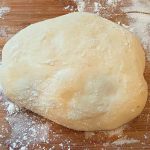
Flammkuchen Dough — Thin, Crisp & Grill-Friendly
Long-fermented pizza dough designed for grilling or pan-frying. The dough stretches remarkably thin by hand, develops excellent flavor during a 2–3 day cold fermentation, and produces a crisp bottom with a tender, flavorful edge. Yield Makes about 24 ounces (680 g) of dough Suggested portions:3 oz (85 g) — 6–8 inch personal pizzas 5 oz (140 g) — 8–10 inch pizza8 oz (225 g) — 12-inch pizza Prep Time 25 minutes Resting/Fermentation Time2–3 days Cook Time Varies by cooking method Total Time2–3 days
Servings 1
Equipment
- 1 Frying Pan
- 1 Half Sheet Pan or Cookie Sheet
- 1 Gallon Plastic Storage Bag
Ingredients
- 4 cups 480 g King Arthur Bread Flour
- 1½ cups 355 g cool water
- ½ teaspoon Fleischmann's Active Dry Yeast
- 2 teaspoons kosher salt
- 2 tablespoons 30 ml olive oil
- 1 tablespoon 12 g granulated sugar
Instructions
Bloom the yeast.
- Dissolve the yeast and 2 teaspoons of the sugar in the cool water. Let stand for 5–10 minutes, until the yeast becomes foamy. Stir in the olive oil.
Mix the dry ingredients.
- In a large mixing bowl, combine the flour, kosher salt, and remaining 1 teaspoon sugar.
Mix the dough.
- Pour the liquid mixture into the flour. Stir just until no dry flour remains. The dough will look shaggy. Cover and let rest for 10 minutes.
- Using wet or lightly oiled hands, perform one set of about 6 gentle stretch-and-folds. Let the dough rest for 10–15 minutes, then repeat. Continue until the dough becomes noticeably smoother and more elastic. Avoid aggressive kneading; the long fermentation will continue developing the dough.
Cold ferment.
- Lightly oil the dough and place it in a covered container. Refrigerate for 2–3 days. The long, slow fermentation develops flavor while making the dough increasingly relaxed and easy to stretch.
Divide the dough.
- Remove the dough from the refrigerator and divide into portions. For grilling, 3-ounce (85 g) portions make excellent personal pizzas. Gently form each portion into a smooth ball, cover, and allow to rest for 20–30 minutes.
Stretch the dough.
- Do not use a rolling pin. Flatten each dough ball gently with your fingertips and stretch until the dough begins to resist. Set it aside and move to the next dough ball. Return to the first dough and stretch again. Continue rotating between the dough balls until each one is extremely thin. The center should become almost transparent.
Grill or pan-fry.
- For grilled pizza, place the stretched dough directly onto a hot grill. Cook until the bottom is set and lightly browned. Flip and either finish cooking before adding toppings, or remove the crust, add toppings to the browned side, and return it to the grill until the cheese is melted and the crust is crisp.
Notes
The stretching technique is the secret to this dough. Resist the temptation to stretch each dough ball to its final size all at once. Stretch it until it begins to resist, set it aside, and move on to another dough ball. By the time you return to the first one, the gluten will have relaxed and the dough will stretch farther. Two or three rounds of gentle stretching can produce an incredibly thin crust without tearing.
The long fermentation also makes this dough particularly well suited to Flammkuchen. When stretched thin enough, the center can become almost transparent while the edges remain capable of producing beautiful bubbles and blisters.
Flavor Timeline
24 hours: Very good flavor and texture.
48 hours: The sweet spot for flavor, browning, and extensibility.
72 hours: Excellent flavor with a softer, more relaxed dough.
4 days: Still very good, although the dough becomes increasingly delicate.
5 days: Usable, but softer and more prone to tearing.
Chef's Note
The dough does not need to look perfect. Its strength comes from time rather than aggressive kneading. Let the refrigerator do the work, and when it's time to stretch, give the dough time to relax between each round. That simple technique is what allows this dough to become remarkably thin without a rolling pin.
One thing I particularly like about this version: the WPRM recipe itself stays clean and practical, while your Flammkuchen story, Brotzeit idea, Feinkost Creme variation, and the video/content material can live above or below the recipe card as your article content. That will make the actual recipe much easier for readers to use.