
I have often wondered why this salad is such a big part of German cuisine as it is
with a lot of cultures.Gurkensalat or cucumber pickles were on our dinner table at grandmas pretty much every meal.
I actually find this salad can be a challenge you have to be able to adjust it to hit that sweet
spot, the perfect balance of sweet and sour.
So allow time to adjust the flavor either with a litte more vinegar, more sugar, salt or more water
if it needs to be toned down. .
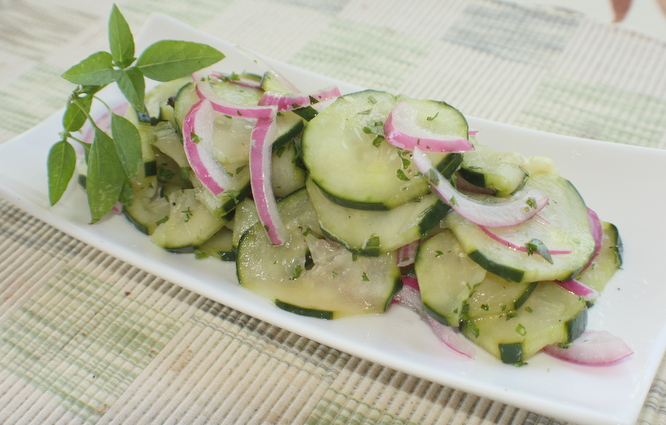
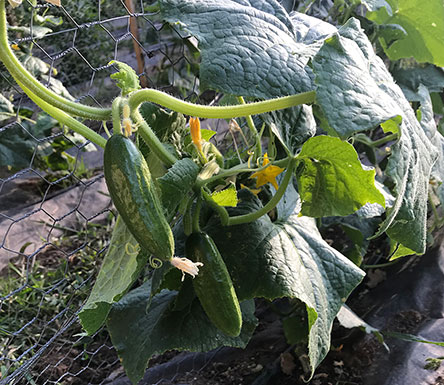
| You know, every German‑American family I’ve ever met has a bowl of Gurkensalat that just appears on the table like magic. It doesn’t matter if it’s Tuesday night meatloaf or a full Sunday roast — somehow the cucumbers always make their way in. And there’s a reason for that. Back in the old country, cucumbers were one of the easiest things to grow, and when the gardens exploded in summer, you had to find a way to keep up. |
So what did people do? They sliced them thin, salted them, and gave them a quick bath in vinegar, sugar, and dill. Simple. Refreshing. Practical. Before refrigeration, that little marinade kept the cucumbers crisp and cool, and over time it became one of those everyday dishes that just stuck around.
And here’s the fun part: is Gurkensalat a salad… or is it a condiment? Honestly, it behaves like both. It brightens up heavy dishes, cuts through rich gravies, and somehow tastes good next to just about anything. In a lot of German‑American homes, it’s as common as having bread on the table — a little crunchy, tangy palate cleanser that reminds you of grandma’s kitchen and summer gardens. It’s humble, it’s homey, and it’s one of those “German goodies” that proves the simplest things often carry the most tradition.
How to Make It
Follow these simple steps…
| INGREDIENTS: 1-2 large Cucumbers, sliced thin Red Onion slices, about 1/2 small red onion 1 teaspoon Salt Dressing 1/4 Cup Water 1/4 cup Vinegar, 1/4 cup Sugar ( less if you want it tart) Fresh Black Pepper Dil weed. Fresh or dry For a creamy salad; 1/4 cup Yogurt or Sour cream |
INGREDIENTS:
2 large Cucumbers, sliced thin
Red Onion slices, about 1/2 small red onion
1 teaspoon Salt
Dressing (Southern German Style)
½ cup neutral salad oil (120 ml) (canola, sunflower, light olive oil)
3 tablespoons water (45 ml)
3 tablespoons white vinegar (45 ml)
3 tablespoons sugar (38 g)
For a creamy salad;
1/4 cup Yogurt or Sour cream
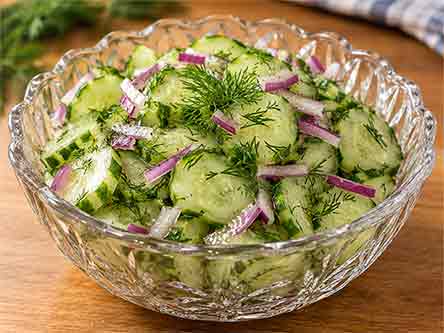
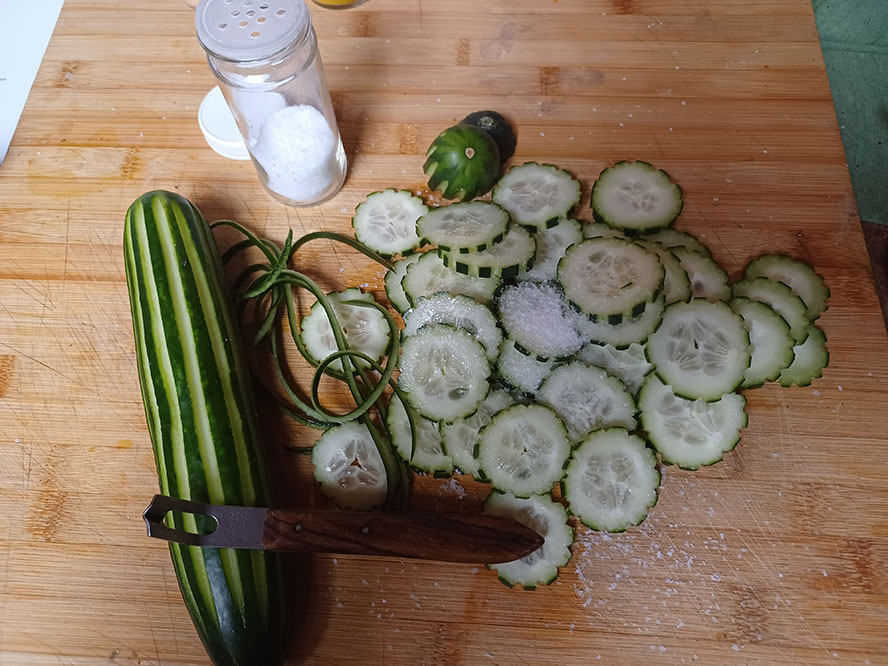
Why Salt and Drain the Cucumbers?
Before adding the dressing, I like to salt the sliced cucumbers and let them drain in a colander.
This is an old-fashioned step, but it makes a big difference in the finished Gurkensalat.
Cucumbers contain a lot of water.
The salt draws some of that moisture out of the cucumber and lets it drain away.
This keeps the finished salad from becoming watery and diluting your dressing.
The salt also seasons the cucumber itself, rather than leaving all the seasoning in the dressing.
I don’t rinse the cucumbers after draining them.
You want to keep the seasoning you’ve already added.
Just let the liquid drain away and give the cucumbers a good toss before adding the dressing.
You can peel the cucumbers completely, leave the peel on, or do what I like to do
score the peel with a channel cutter before slicing.
It gives the cucumber a little texture and makes the finished salad look nice, too.
For 2 cucumbers, I use about 2 teaspoons kosher salt.
Toss the sliced cucumbers with the salt, place them in a colander,
and let them drain for about 20–30 minutes.
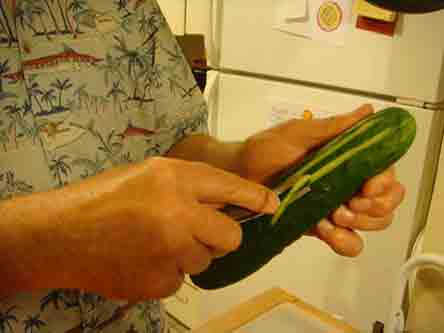
Peel the cucumber or cut part of the skin off. Here I am using a channel Cutter
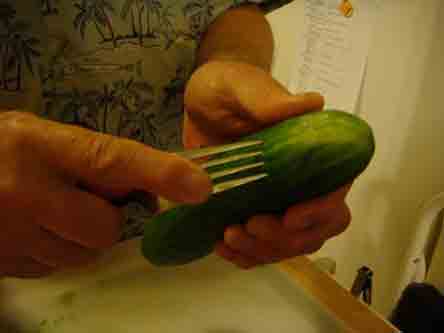
You can accomplish a similar thing with a fork ,
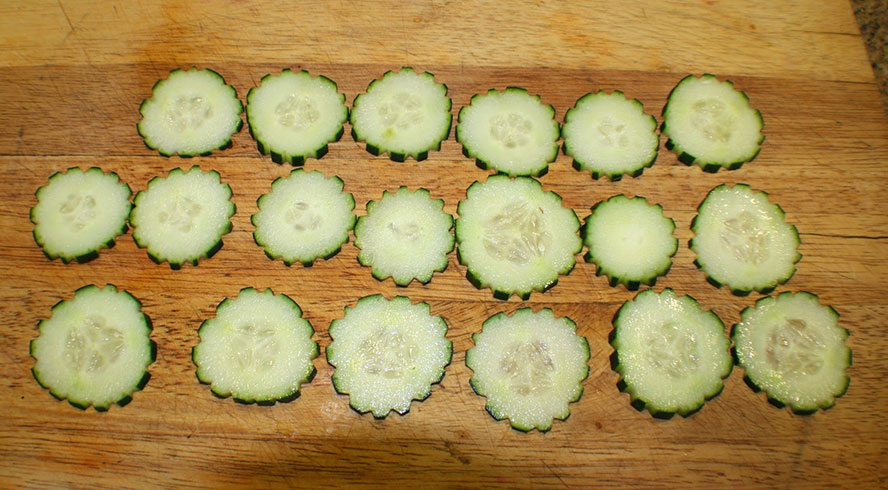
I like to salt the cucumbers. You don’t have to line them up.
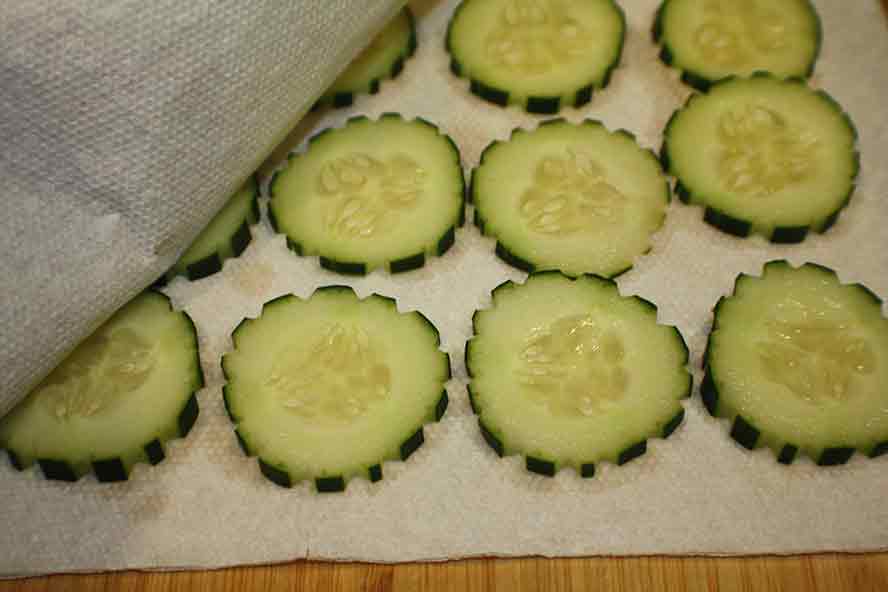
Sometimes I put them on paper towels so the excess water is wicked out of them
especially if I think they might be a little bitter.
P
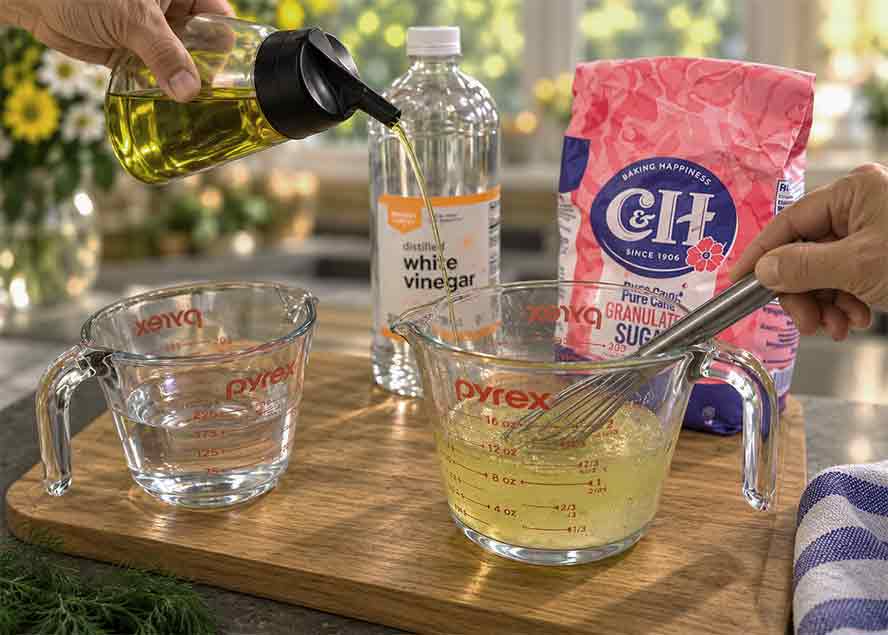
Measure the water, vinegar and sugar and make sure the sugar is disolved.
Drizzle in the oil while whisking, which helps to emulsify it.
Choosing the Oil and Vinegar
A good Gurkensalat dressing is all about balance. The cucumber is mild, the dill is fresh and grassy, and the onion adds a little bite. The dressing should bring everything together without overpowering the cucumber.
What oil should you use?
For this style of Gurkensalat, I prefer a mild, neutral oil. Vegetable oil, canola oil, or a light sunflower oil are all good choices.
You don’t want an oil with a strong personality. Extra-virgin olive oil, for example, can be delicious in many
salads, but its peppery, fruity flavor can compete with the delicate cucumber and dill.
A neutral oil does something more useful here:
it gives the dressing body and helps the dressing cling to the cucumber without announcing itself.
And there’s a little food science behind that.
Oil and vinegar don’t naturally want to stay together. Vinegar is mostly water, while oil is fat, so when you whisk them together they form tiny droplets of one suspended in the other. That’s an emulsion. It isn’t permanent, but even a temporary emulsion is useful.
When you whisk the oil into the vinegar mixture, the oil breaks into many tiny droplets.
Those little droplets spread across the surface of the cucumber instead of separating into a layer of oil at the bottom of the bowl.
That’s what we’re after—a dressing that coats the cucumber rather than simply running off it.
And what about the vinegar?
This is why I like regular white distilled vinegar for this salad.
It gives you a clean, bright acidity without adding another strong flavor. Apple cider vinegar has a fruity character.
Red wine vinegar brings more flavor and color.
Balsamic is sweet and rich. White wine vinegar is also an excellent choice and gives a softer, more rounded acidity.
But distilled white vinegar is wonderfully straightforward.
It lets the cucumber, dill, onion, and sweet-and-sour balance taste like themselves.
The secret is in the whisking
Don’t just pour the oil and vinegar over the cucumbers and stir once.
I like to put the water, vinegar, and sugar together first and whisk until the sugar is mostly dissolved.
Then slowly whisk in the oil.
You’re temporarily breaking the oil into tiny droplets and distributing them
throughout the watery part of the dressing.
Once the dressing goes onto the drained cucumbers,
those tiny droplets have much more opportunity to coat the cucumber.
It’s not a mayonnaise-thick emulsion, and it doesn’t need to be. We’re simply creating
a light, temporary emulsion that gives the dressing better cling.
And there is another reason your salting-and-draining step matters:
you’ve already removed some of the cucumber’s excess water.
That means the dressing isn’t immediately diluted by a puddle of cucumber juice.
So you have three things working together:
Salt the cucumber → drain away excess water → whisk the oil into the vinegar dressing.
That’s a pretty simple technique, but it is what makes the difference between
a cucumber salad with dressing at the bottom of the bowl and one where
the sweet-sour dressing actually coats the cucumber.
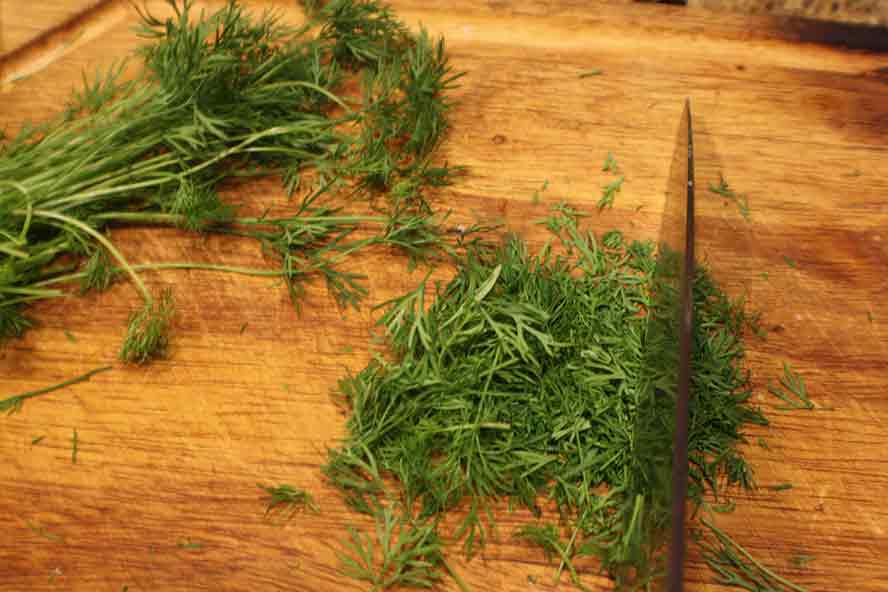
Chop the dill to with a french knife
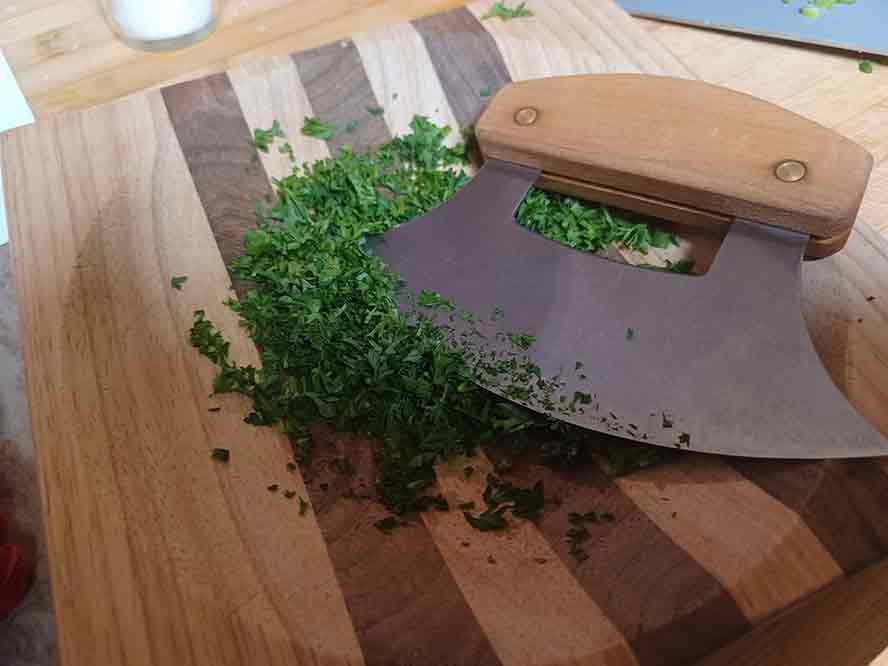
Or use an ULU and UlU chopping block that I recommend highly.
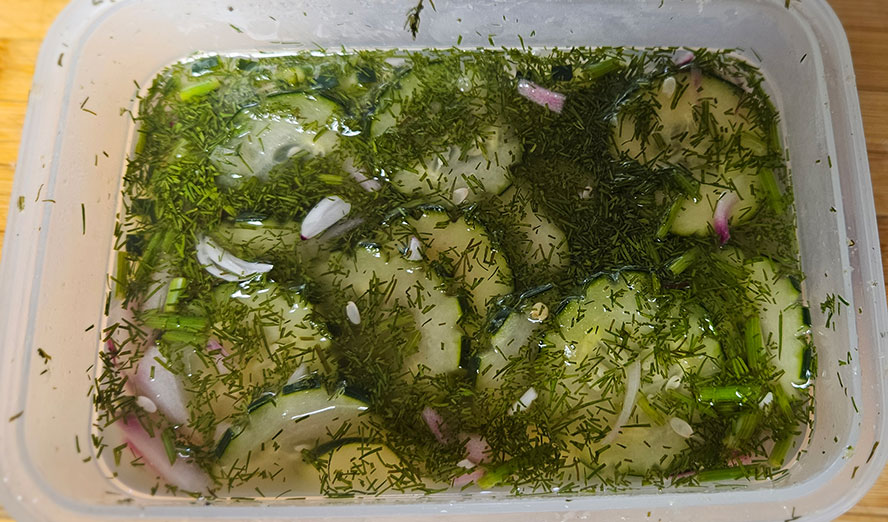
Blend the dressing in with the cucumbers and onions.
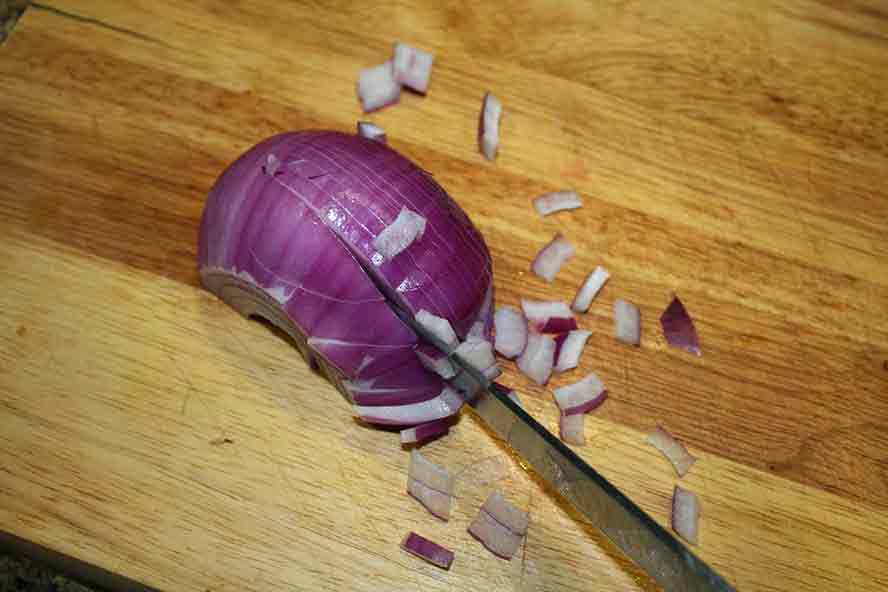
Chop the red onion in any way you like. This is optional some folks like it and some don’t.

Cucumber Salad ( Gurkensalat )
Equipment
- Colander
- Knife
- Mandoline (optional)
- ULU (optional)
Ingredients
Cucumbers
- 2 English cucumbers striped and scored, then thinly sliced
- 1 teaspoon kosher salt about 3 g, for salting the cucumbers
Southern German Style Dressing
- 2 tablespoons neutral oil such as sunflower or canola (30 ml)
- 2 tablespoons white distilled vinegar 30 ml
- 2 teaspoons sugar 8 g
- 2-4 Tablespoons cucumber water reserved from salting the cucumbers (30–60 ml)
- Finish
- 2 tablespoons fresh dill finely chopped (about 6 g)
- 1 –2 tablespoons very thinly sliced onion optional (about 15–30 g)
Instructions
- Prepare the cucumbers. Peel the cucumbers in stripes, leaving some of the green skin intact. If you like, score the cucumber lengthwise with a channel cutter. Slice the cucumbers thinly.
- Salt and drain. Place the cucumber slices in a colander and sprinkle with the kosher salt. Toss well so the salt is distributed throughout the cucumbers. Let them drain for 20–30 minutes. The salt draws excess water from the cucumber, concentrating its flavor and preventing the finished salad from becoming watery.
- Save the cucumber water. Don’t throw away the liquid that collects beneath the colander. Measure out 2 tablespoons (30 ml) to start. You can add more later if the dressing needs to be lighter or less sharp. There is no need to rinse the cucumbers.
- Make the dressing. In a small bowl or measuring cup, whisk together the vinegar and sugar until the sugar has mostly dissolved. Whisk in 2 tablespoons of the reserved cucumber water.
- Whisk in the oil. Slowly drizzle the oil into the vinegar mixture while whisking. You’re not trying to make a thick vinaigrette; you’re simply breaking the oil into small droplets so it disperses through the dressing and gives it a little body and cling.
- Combine. Add the drained cucumbers, fresh dill, and onion, if using. Toss gently until the cucumbers are evenly coated.
- Taste and adjust. Taste the salad and adjust with a little more cucumber water if it is too sharp, vinegar if it needs more tang, or sugar if you want a sweeter sweet-and-sour flavor. Add salt only if it truly needs it.
- Let the salad stand for 10–15 minutes before serving. The cucumbers will release a little more juice and the flavors will come together.