
Flammkuchen Stovetop
German Style Pizza made on the stovetop
No pizza oven required
A Little Background
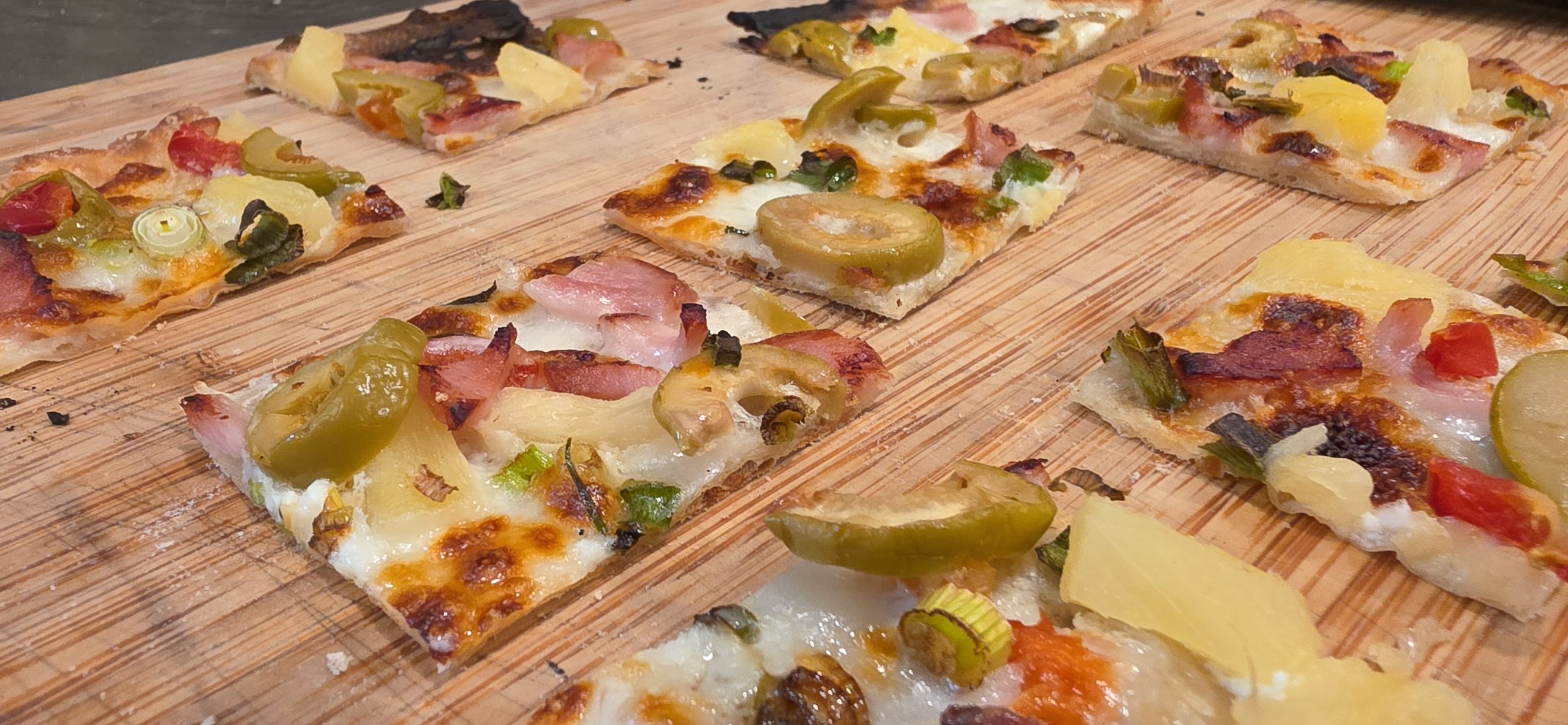
Flammkuchen — A Flatbread Made for Sharing
Flammkuchen, also spelled Flammenkuchen, is a traditional flatbread from the German-speaking regions bordering Alsace and Lorraine. Originally, a thin piece of dough was used to test the heat of a wood-fired bread oven before the loaves went in. The dough was spread very thin, topped simply, and placed close to the flames, where the intense heat created its characteristic blistered, browned edges. Today, that same crispness is what makes a good Flammkuchen so special.
I like to think of Flammkuchen as a natural part of a German Brotzeit. Rather than making individual portions, shape the dough into a generous rectangle, cut it into small squares, and put it right in the middle of the table. Everyone can reach for a piece while the conversation carries on. The crust needs to be very thin and very crisp—thin enough to almost see through before baking, yet sturdy enough that each little square can be picked up without flopping over.
For our version, we begin with a long-fermented pizza dough and stretch it until it is almost transparent. Since we don’t have a pizza stone, we first cook the bare dough in a hot skillet until the bottom is nicely browned and crisp. Then comes the fun part: we build the Flammkuchen and give it a quick blast under the broiler. That intense heat creates those beautiful blisters and little patches of char that bring so much flavor to the crust.
And there’s a surprise in this version: the creamy base is our Feinkost Creme, giving this Flammkuchen a little German deli-counter character before we add the toppings. The result is something between a traditional Flammkuchen, a Brotzeit centerpiece, and a very thin, shareable pizza—made for eating with your hands and lingering at the table.
Prep
Step 1
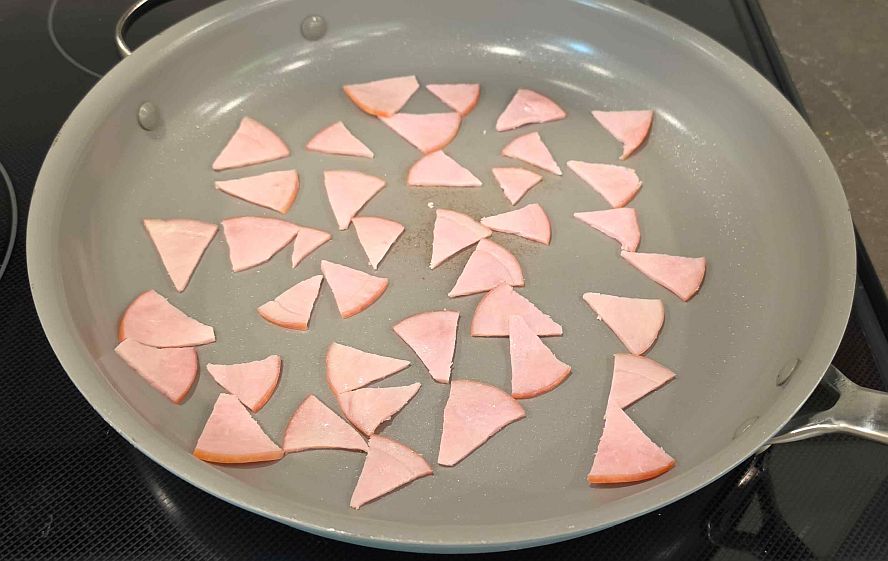
1. Prepare the toppings.
Brown the Canadian bacon in a skillet over medium heat until lightly browned
and slightly crisp around the edges. Remove and set aside.
Have all of the remaining toppings ready before stretching the dough.
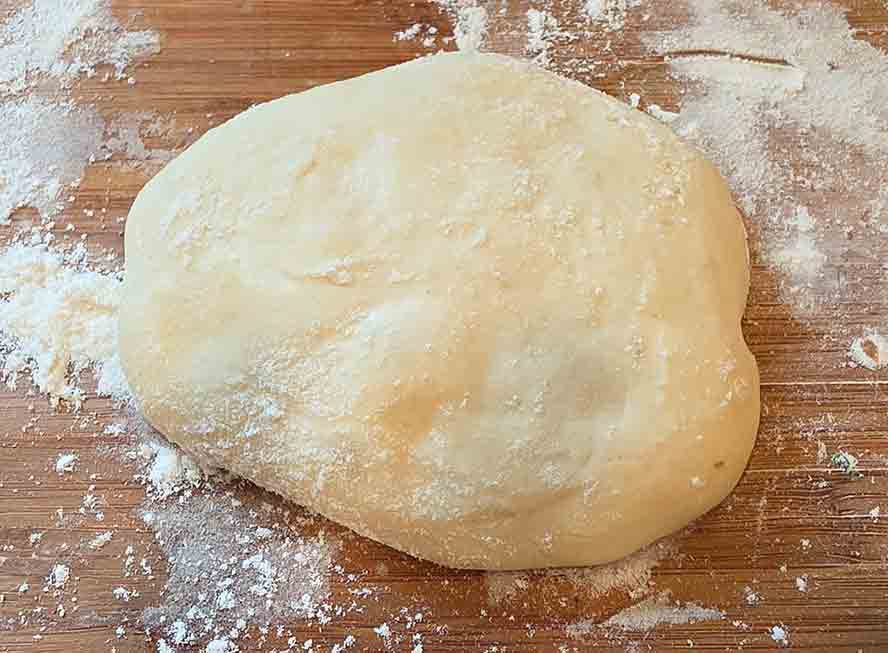
2. Prepare the dough.
Remove a 3-ounce (85 g) dough ball from the refrigerator and let it rest,
covered, for 20–30 minutes.
Lightly flour your work surface and gently flatten the dough with your fingertips.
Step 3
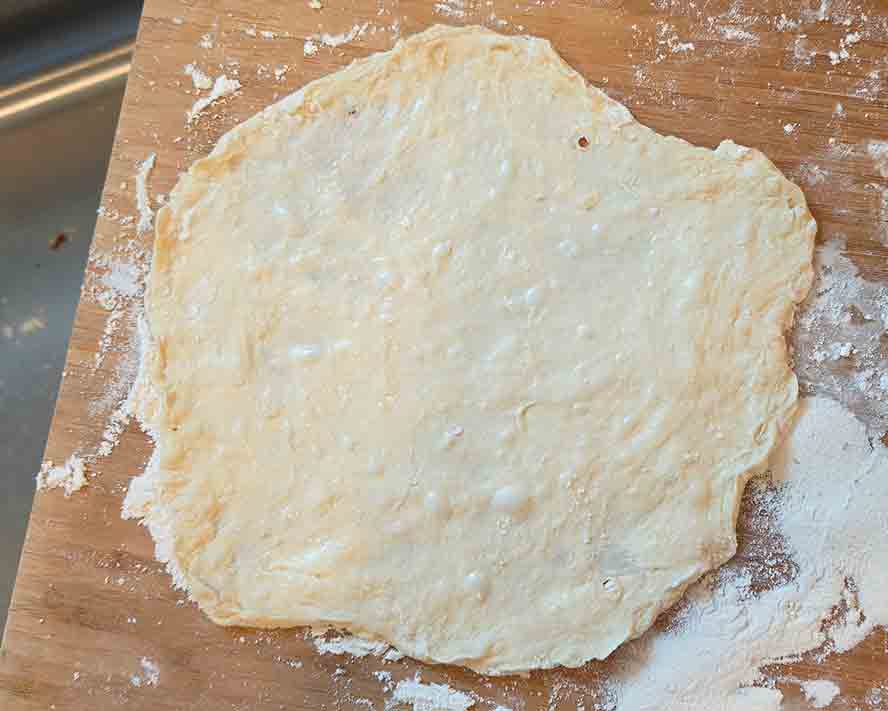
3. Stretch the dough.
Begin stretching the dough with your hands, working from the center toward the edges.
Stretch it to about 7–8 inches (18–20 cm), but don’t try to get it to its final size yet.
The dough should be extremely thin.
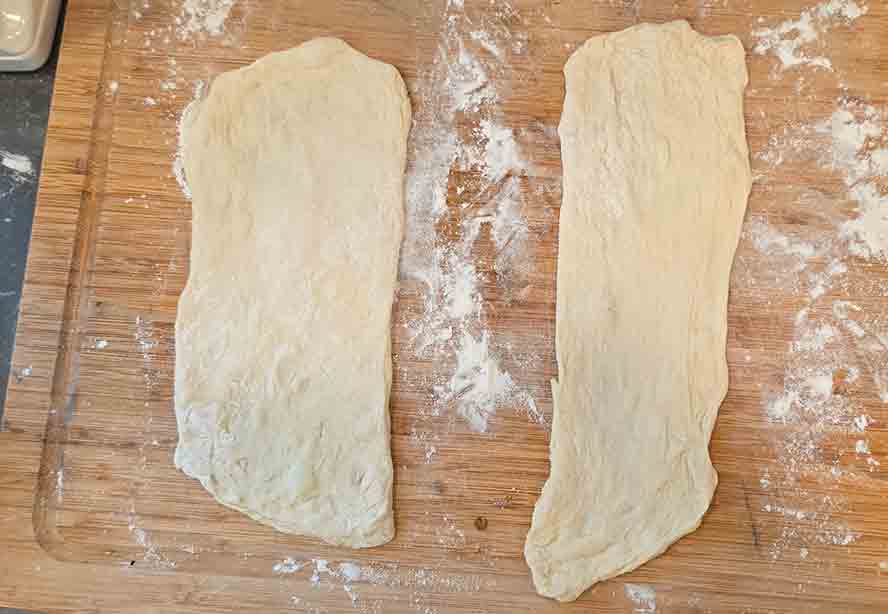
Here I divided the dough ball in 2 pieces.
It is easier to handle especially when you are getting used to handling thin dough.
Step 4
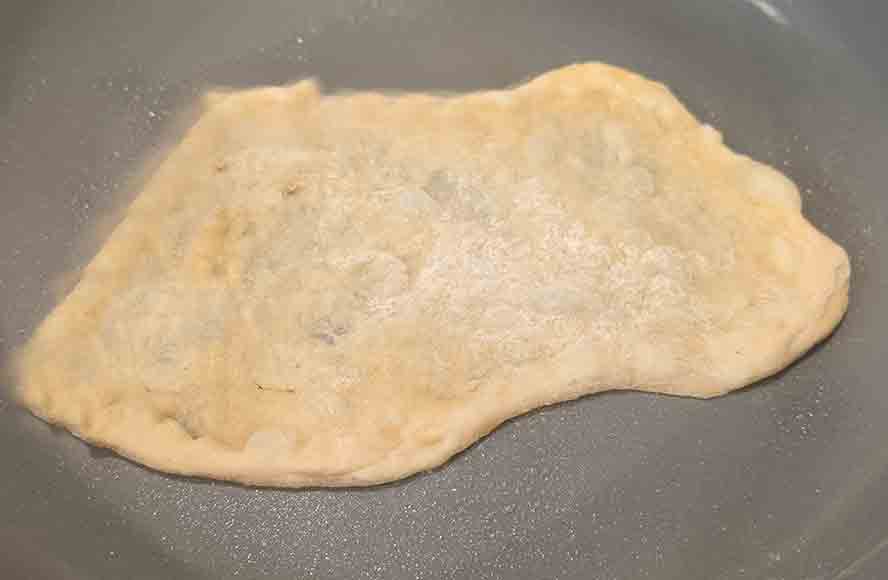
4. Finish stretching over the skillet.
Lightly oil a skillet and place it over medium-high heat.
Carefully lift the dough with both hands and lay it into the skillet.
Gently pull the dough outward with your fingertips, stretching it into a thin,
irregular rectangle. Don’t worry about making it perfectly shaped.
The center should be almost transparent in places.
Step 5
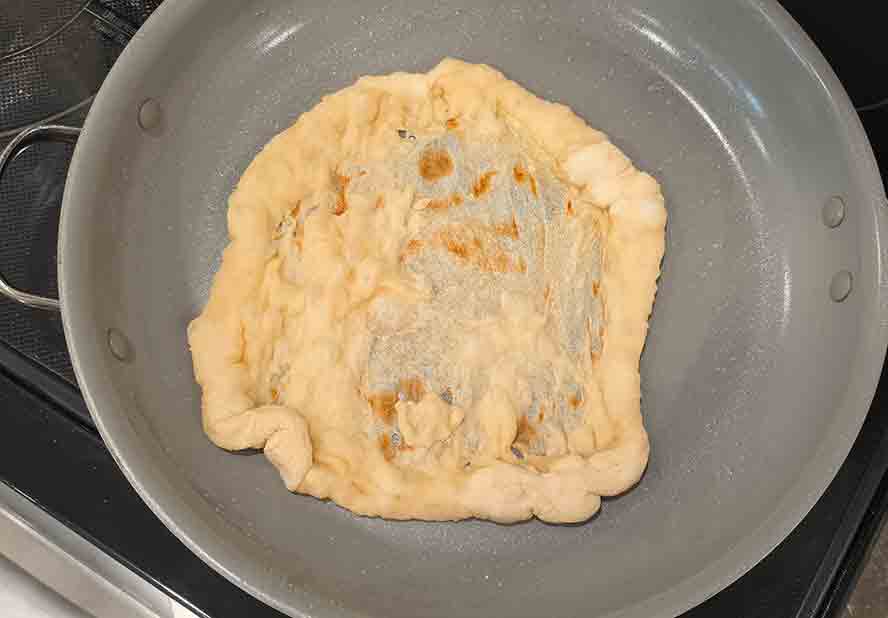
5. Brown the bottom and top.
Cook the bare dough until the underside is golden brown and crisp, about 2–4 minutes.
Flip it over and brown the other side enough to set.
The crust should feel firm enough to support the toppings without becoming soft.
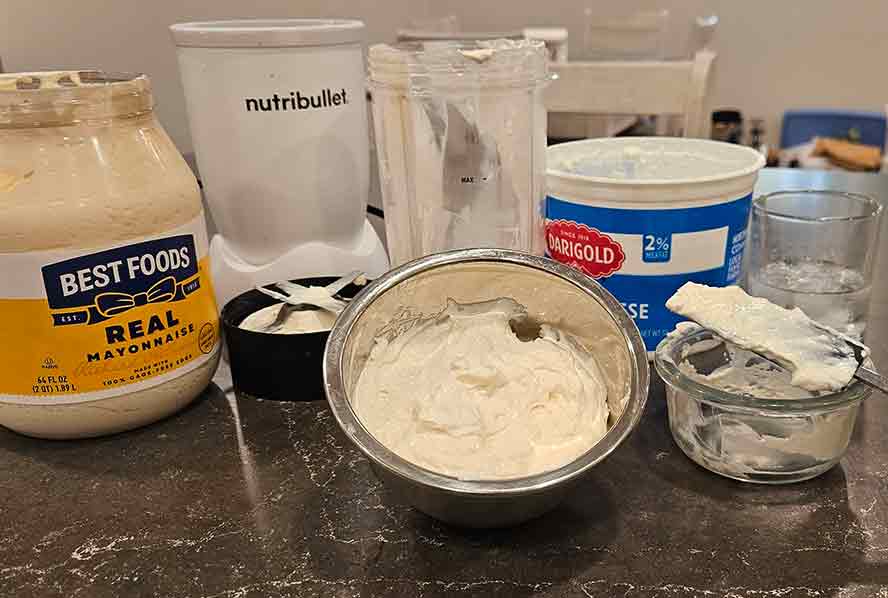
In the recipe I talk about using Fienkost creme .
This is a blend of mayonnaise and cottage cheese.
Blended together. It makes a creamy dressing that is less oily.
This is used a lot for making salads like chicken and tuna,
and so it is convenient to use on this Flammkuchen as well.
You can also use sour cream or cream fraische.
Step 6
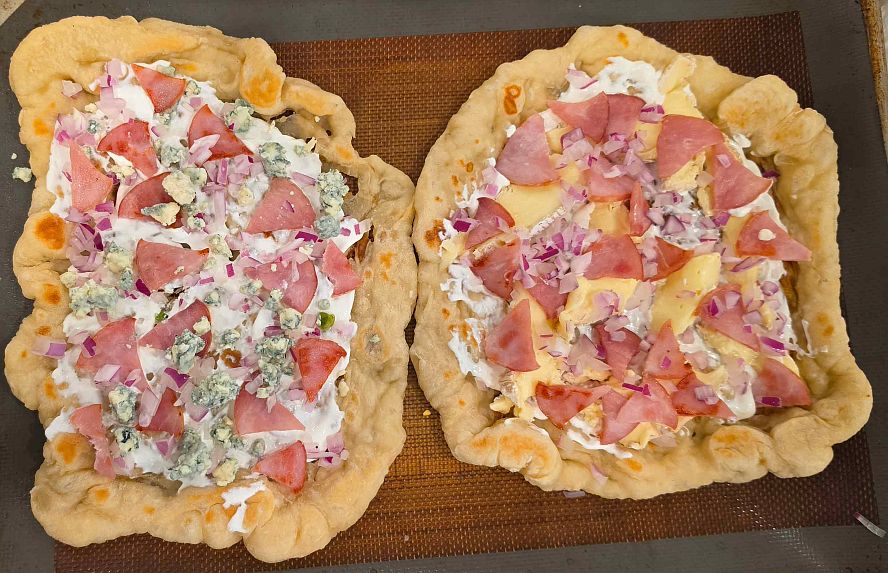
6. Add the Feinkost Creme and toppings.
Spread the Feinkost Creme thinly over the browned crust, leaving a small border around the edge.
Scatter the Canadian bacon, red onion, tomato and cheese over the top.
Keep the toppings relatively light so the thin crust stays crisp.
Step 7
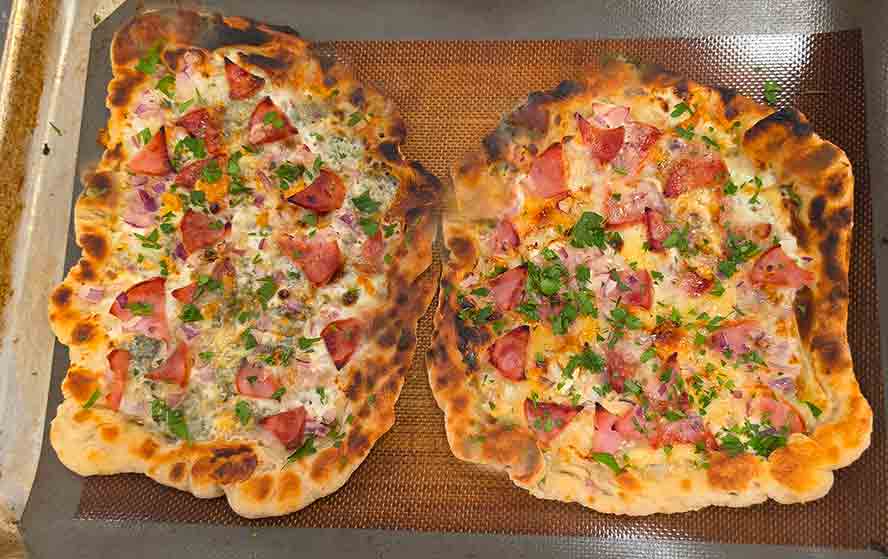
7. Broil.
Transfer the Flammkuchen to a baking sheet if necessary and place it under a very hot broiler.
Broil until the cheese and toppings are bubbling and the edges develop dark,
blistered spots, about 1–3 minutes. Watch carefully—the thin crust can brown very quickly.
The dark spots are not burnt, they are blistered and charred and very tasty!
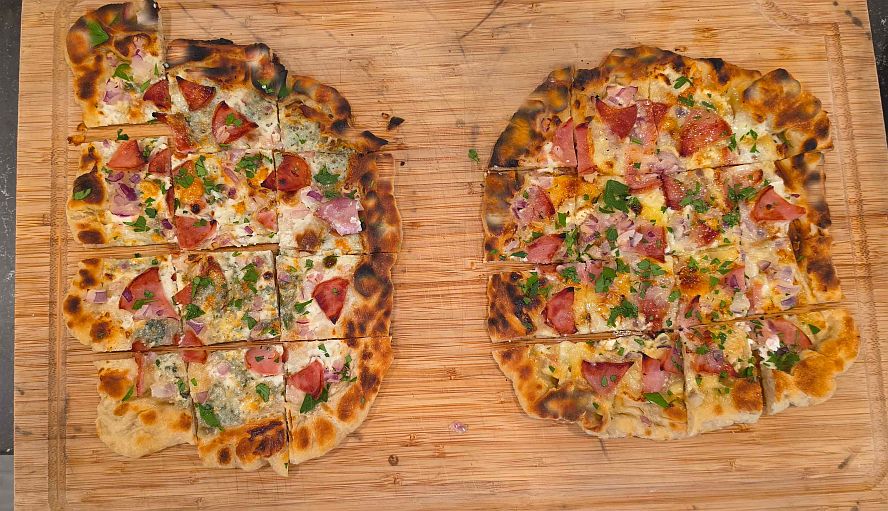
8. Finish and serve.
Remove from the broiler and sprinkle with fresh parsley and freshly ground black pepper.
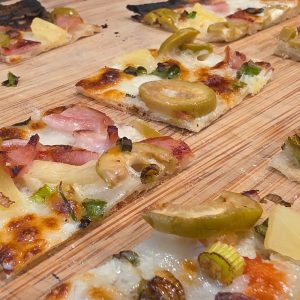
Cut into small squares and serve immediately.

These thin slices are perfect. They are cracker like. and don’t flop
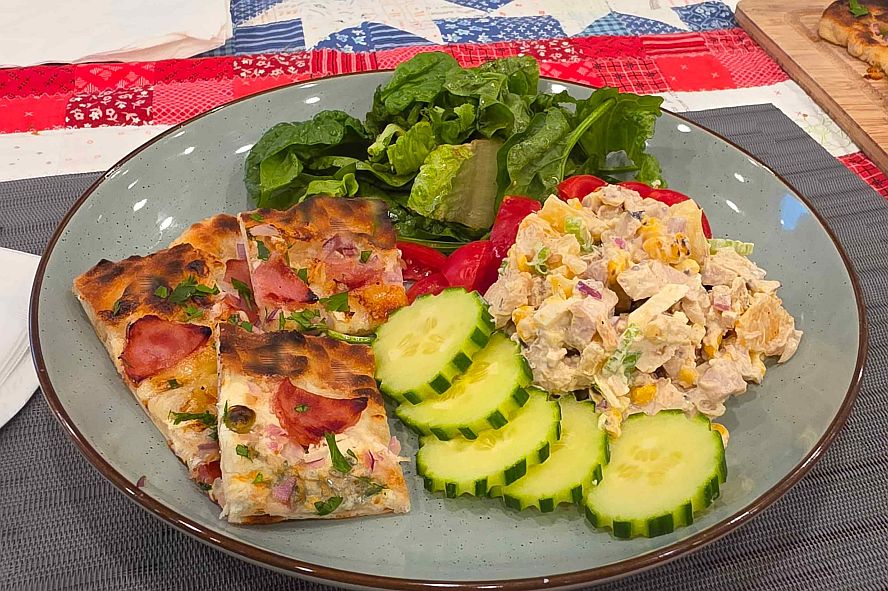
This makes a perfect addition to a Brotzeit plate, I added a nice Chicken and fruit salad
(Geflügelcocktail) and some greens and veg.
Notes
The crisp bottom is essential. Unlike a thicker pizza crust,
Flammkuchen should be thin and crisp enough that the small pieces can be picked up without flopping over.
Browning the bare dough in the skillet gives the crust the direct heat it needs underneath,
while the broiler provides the intense heat from above that creates the characteristic blisters and char.
You don’t need a pizza stone for this method.
For a traditional Flammkuchen:
crème fraîche instead of Feinkost Creme and keep the toppings simple with bacon and onion.
For the German Goodies version:
Feinkost Creme makes a wonderful substitute for crème fraîche,
adding the flavor of a German deli-style cream while making use of another recipe in your kitchen.
Flammkuchen Stovetop
Equipment
- 1 large peel or board for the crust
Ingredients
- 3 oz (85 g) ball long-fermented pizza dough
- 2 tablespoons (30 g) Feinkost Creme or Sour Cream
- 1 ounce 28 g Canadian bacon, cut into small pieces
- 1 tbsp 15–30 g finely diced red onion
- 2 tbsp 15–30 g diced tomato
- 28 grams cheese, crumbled or shredded
- 1 teaspoon 5 ml olive oil, for the skillet if needed
- Fresh parsley for finishing
- Freshly ground black pepper to taste
Optional Toppings
- Thinly sliced ham
- Bacon
- Mushrooms
- Bell peppers
- Green onions
- Blue cheese
- Swiss cheese
- Gruyère
Instructions
Prepare the toppings.
- Brown the Canadian bacon in a skillet over medium heat until lightly browned and slightly crisp around the edges. Remove and set aside. Have all of the remaining toppings ready before stretching the dough.
Prepare the dough.
- Remove a 3-ounce (85 g) dough ball from the refrigerator and let it rest, covered, for 20–30 minutes. Lightly flour your work surface and gently flatten the dough with your fingertips.
Stretch the dough.
- Begin stretching the dough with your hands, working from the center toward the edges. Stretch it to about 7–8 inches (18–20 cm), but don’t try to get it to its final size yet. The dough should be extremely thin.
Finish stretching over the skillet.
- Lightly oil a skillet and place it over medium-high heat. Carefully lift the dough with both hands and lay it into the skillet. Gently pull the dough outward with your fingertips, stretching it into a thin, irregular rectangle. Don’t worry about making it perfectly shaped. The center should be almost transparent in places.
Brown the bottom.
- Cook the bare dough until the underside is golden brown and crisp, about 2–4 minutes. The crust should feel firm enough to support the toppings without becoming soft.
Add the Feinkost Creme and toppings.
- Spread the Feinkost Creme thinly over the browned crust, leaving a small border around the edge. Scatter the Canadian bacon, red onion, tomato and cheese over the top. Keep the toppings relatively light so the thin crust stays crisp.
Broil.
- Transfer the Flammkuchen to a baking sheet if necessary and place it under a very hot broiler. Broil until the cheese and toppings are bubbling and the edges develop dark, blistered spots, about 1–3 minutes. Watch carefully—the thin crust can brown very quickly.
Finish and serve.
- Remove from the broiler and sprinkle with fresh parsley and freshly ground black pepper. Cut into small squares and serve immediately.