
Wienerschnitzel (Pork Style)
Schnitzel is a Technique More than a Recipe
Wiener Schnitzel is one of those dishes that looks simple on the plate but carries a century of technique behind it. At its heart, it isn’t about fancy ingredients or complicated steps — it’s about understanding how to treat a thin piece of meat with respect. The magic comes from the way you cut it, the way you pound it, the way you bread it lightly so it can breathe, and the way it floats in hot oil just long enough to puff and turn golden.
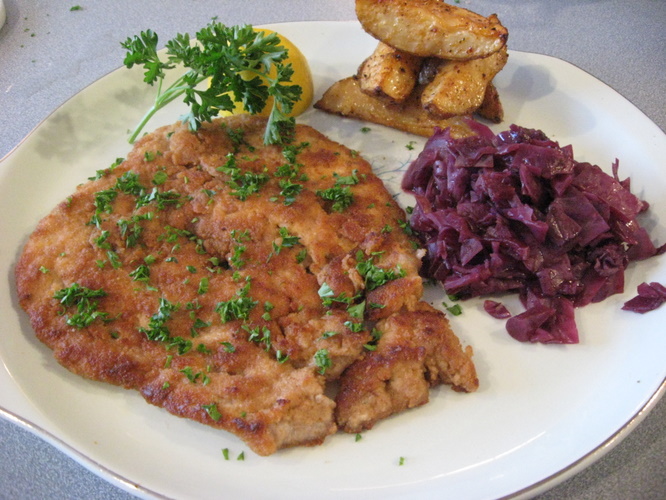
Think of this less as a recipe and more as a craft passed down through kitchens in Vienna, Bavaria, and every German‑American home that kept the tradition alive. Once you learn the rhythm — the breading station, the gentle handling, the shimmering oil –“The Souffle effect“— you can make a perfect schnitzel anytime, with any cut of meat. This page walks you through the essential steps so you can master the technique and understand why each part matters.
Prep
Step 1
Step 2
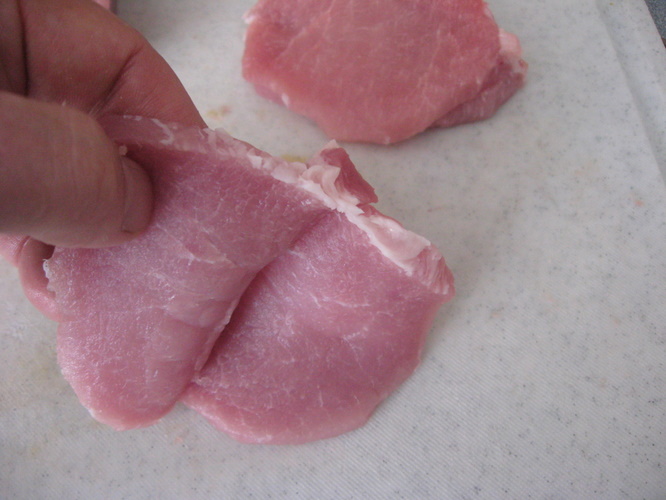
all the way down you can see you have 2 wings.
spread them apart and you have a nice 6-8 oz steak
Step 3
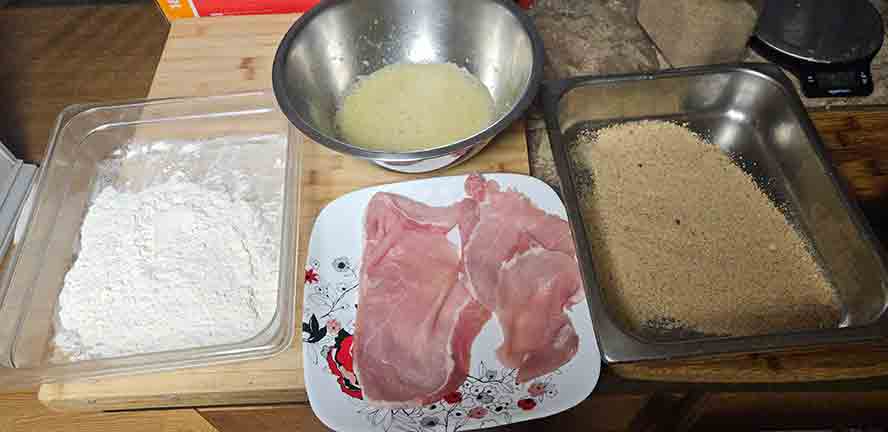
Here is the breading station set up,
1. Dip it in the flour and coat both sides.
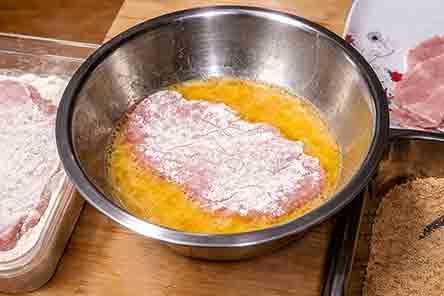
2. Dip in the egg wash getting it well coated
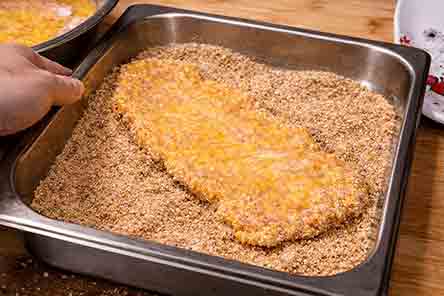
3. put it in the bread crumbs and just make sure it is well coated.
Step 4
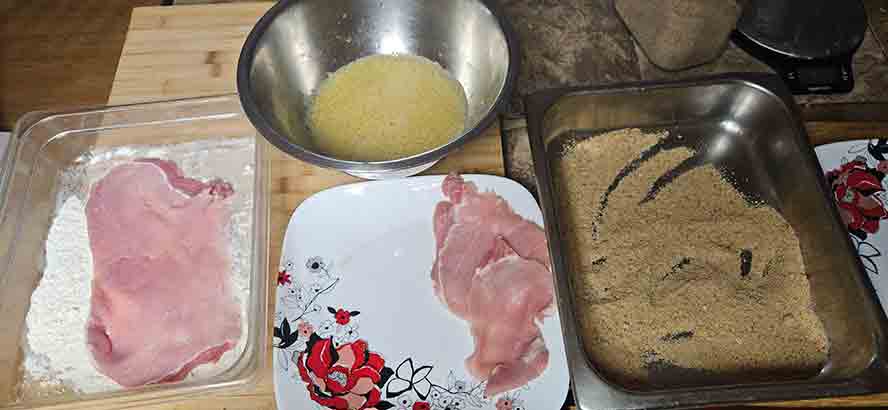
1. Dip it in the flour and coat both sides.
Step 5
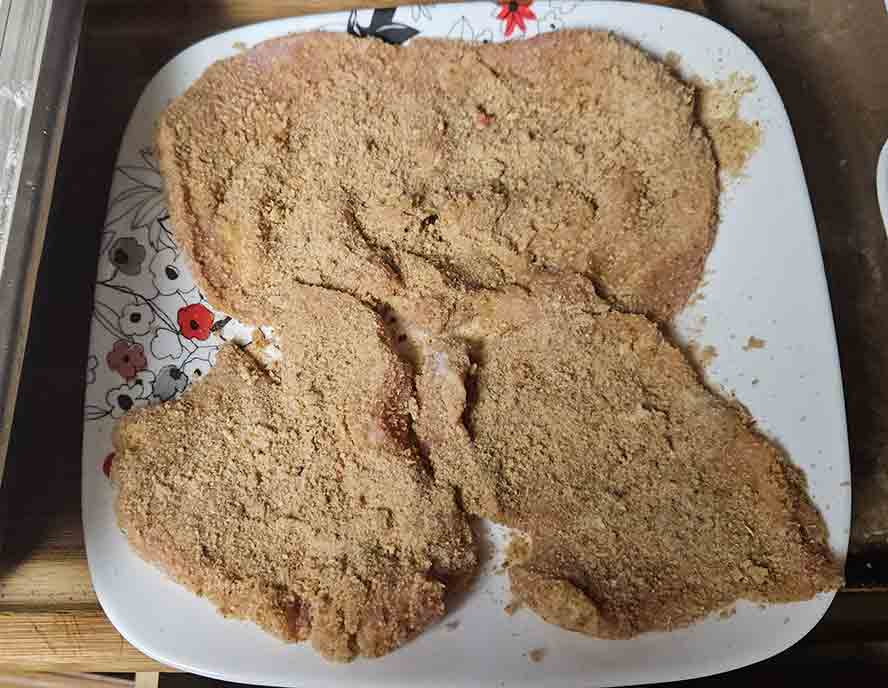
Let the Schnitzel rest on the plate for a few minutes so the crumbs can set.
Now it is time to heat the oil
Lets discuss the Souffleé effect
Im Fett Schwimmend
The Secret of the (Soufflé Effect)
Why a schnitzel needs to “swim” to puff and stay light
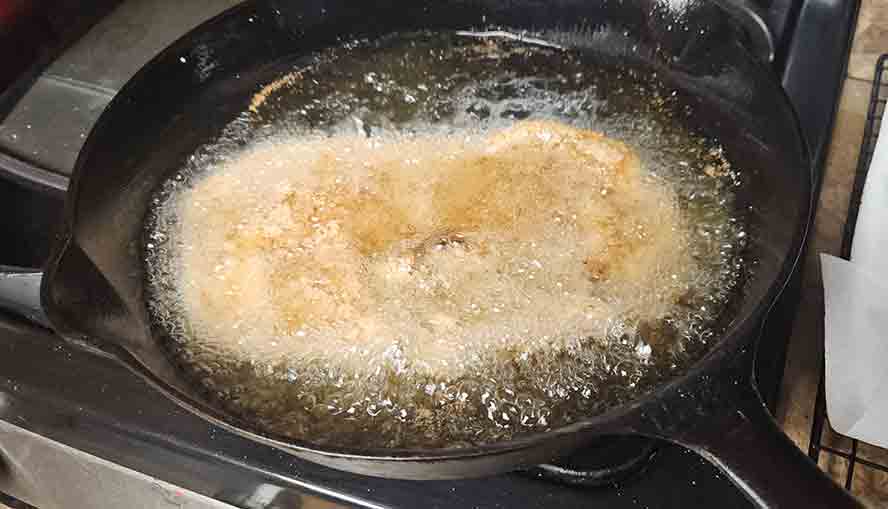
The hallmark of a true Wiener‑style schnitzel is that delicate, wavy crust — the little blisters, the lift, the way the breading seems to breathe in the pan. This isn’t an accident. It comes from frying the schnitzel im Fett schwimmend, literally “swimming in fat.” When the oil is deep enough for the schnitzel to float freely, the heat surrounds it evenly. The moisture inside turns instantly to steam, pushing outward and lifting the breading so it stays crisp, airy, and beautifully blistered.
Shallow oil can’t do this. When the schnitzel sits flat on the pan, the crust gets pressed down, the heat drops, and the breading absorbs oil instead of repelling it. But in about 2 cm (¾ inch) of clean, hot oil, the schnitzel rises off the bottom and moves gently as the steam escapes. That movement — those tiny waves of oil washing over the top — is what creates the soufflé effect. It’s the difference between a heavy, pan‑fried cutlet and the light, golden, celebratory schnitzel that made Vienna famous.
Step 6
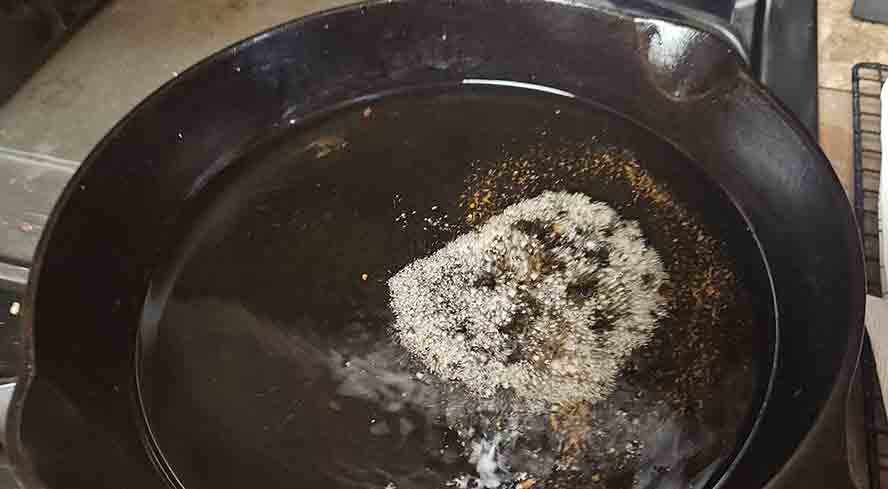
I put about 1 cup of olive oil in a 12 inch skillet, and it is about 3/4 inch deep.
I heat it on medium and not high so it doesn’t get too hot.
You can tell when it is hot enough by sprinkling in a few crumbs to see if they sizzle.
Step 7
Step 8
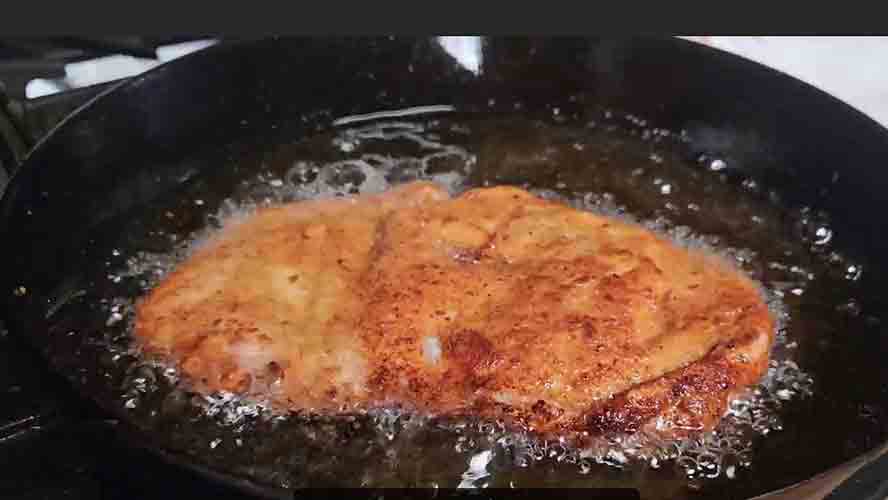
Put a Schnitzel in the hot fat gently with tongs.
Shake the pan lightly or spoon some of the oil over the top.
This creates the souffle effect.
Step 9
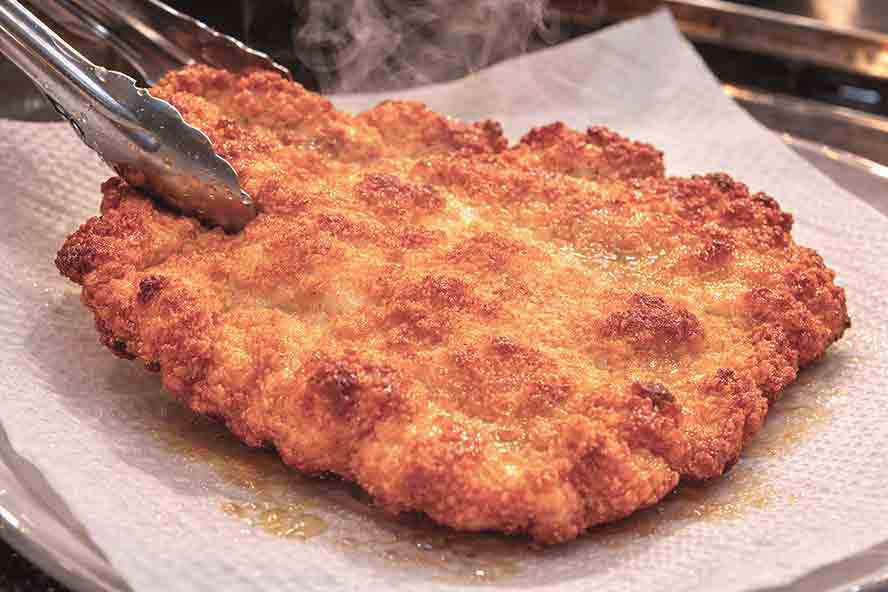
Take the Schnitzel carefully out of the pan and drain it on a paper towel.
Here is the finished Schnitzel ready to serve.
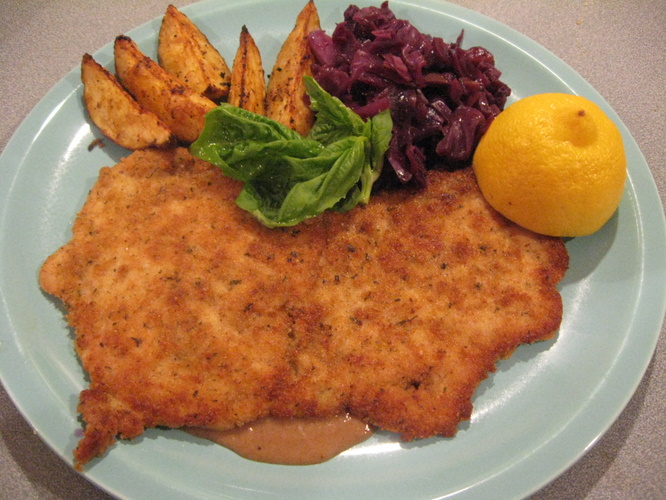
This Schntizel is so good that all you need is a squeeze of lemon to go with it.
Traditionaly you will find Wienerschnitzel served with pomme Fritz,
An Austrian style potato salad, made with just broth and onions no bacon.
You will also see it with boiled potatoes tossed with butter and parsley.
Also you could serve it with ligonberries, while this is not traditional it is very tasty,
Another side dish that goes well with this is Cucumber Salad.
I like to serve Rohtkohl with it but this is not traditional.
Wienerschnitzel (Pork Style)
Ingredients
- 4 pieces of Pork Loin about 6 -8 oz
- For Breading Station:
- 1 cup Flour
- 2 cups Bread Crumbs or Cracker Crumbs
- 1-1/2 cup Milk
- 2 eggs
- 3/4 to 1 cup of vegetable or olive oil
- enough to fill the pan about 3/4 inch or 2 cm
- 2 fresh lemons
- Optional
- Fresh parsley
Instructions
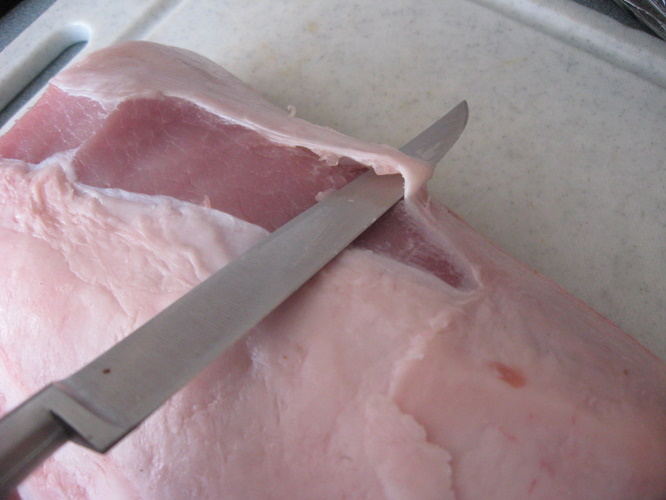
- Trim the pork loin
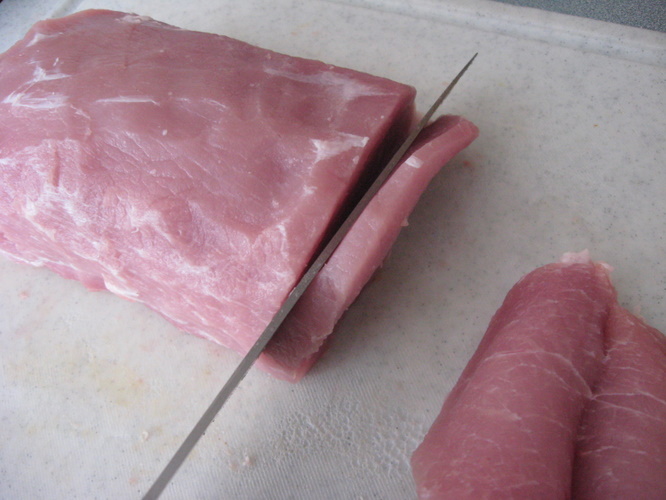
- For a nice size Schnitzel you will need to do what is called a butterfly cut. Make this first slice almost all the way down but not all the way through.
- Then cut a second slice right next to it, all the way down you can see you have 2 wings.
- spread them apart and you have a nice 6-8 oz steak.
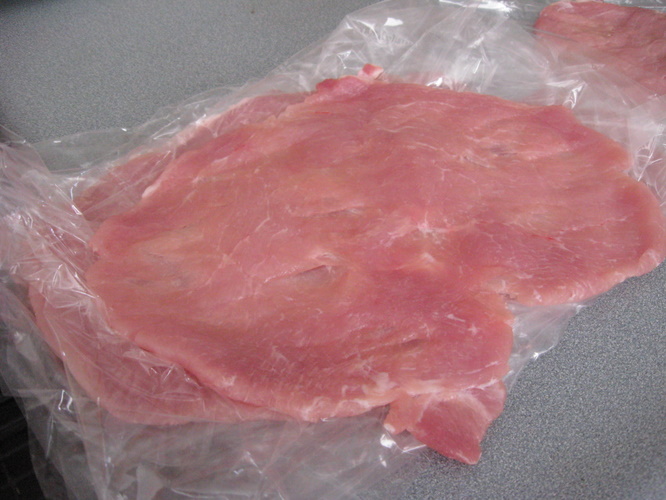
- Now gently pound this out between plastic wrap or storage bag cut open. It should be really nice and thin, but not paper.
- Now let’s set up the Breading Station
- 2 large pans work well, and a mixing bowl.
- Put the flour in one pan, the crumbs in another,
- and the egg mix in a large mixing bowl.
- Dip it in the flour and coat both sides.
- Dip in the egg wash getting it well coated
- put it in the bread crumbs and just make sure it is well coated.
- Let the Schnitzel rest on the plate for a few minutes so the crumbs can set.
- Now it is time to heat the oil
- I put about 1 cup of olive oil in a 12 inch skillet, and it is about 3/4 inch deep.
- Heat it on medium and not high so it doesn’t get too hot, about 350 degrees F
- You can tell when it is hot enough by sprinkling in a few crumbs to see if they sizzle.
- Put a Schnitzel in the hot fat gently with tongs.
- Shake the pan lightly or spoon some of the oil over the top.
- This creates the souffle effect.
- Gently turn the Schnitzel once and brown the other side.
- 9.Take the Schnitzel carefully out of the pan and drain it on a paper towel.
- Traditionaly you will find Wienerschnitzel served with pomme Fritz,
- An Austrian style potato salad, made with just broth and onions no bacon.
- You will also see it with boiled potatoes tossed with butter and parsley.
- Also you could serve it with ligonberries, while this is not traditional it is very tasty,
- Another side dish that goes well with this is Cucumber Salad.
- I like to serve Rohtkohl with it but this is not traditional.
Final Thoughts
This dish has endless creative ways it can be prepared.
I would love to see what you come up with.
Please let me know.
Other Great Recipes You Might Enjoy