
Nov 9, 2025
Lafayette Sourdough Sandwich Loaf
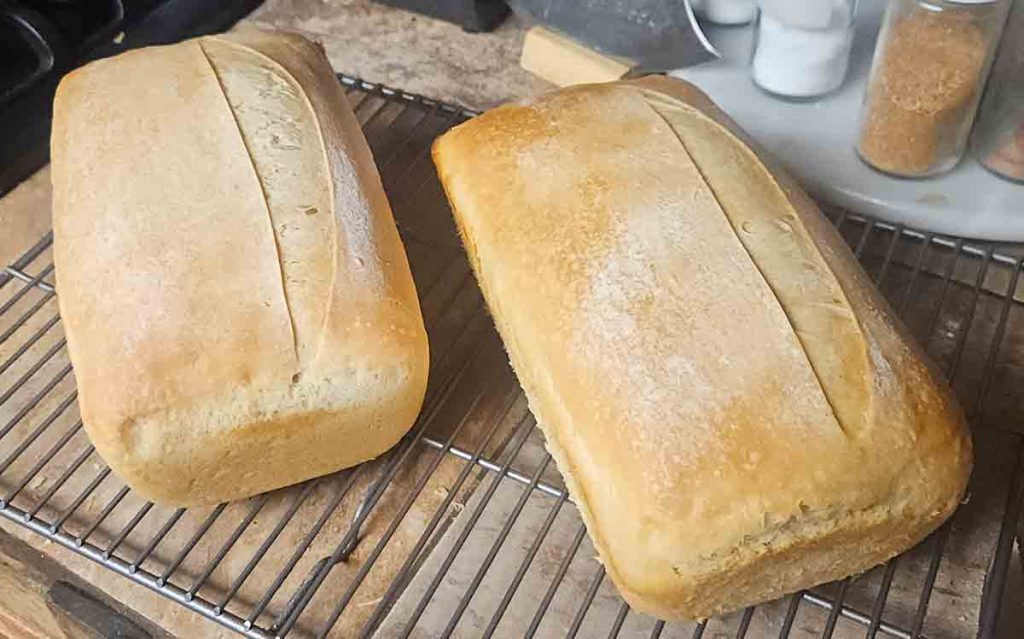
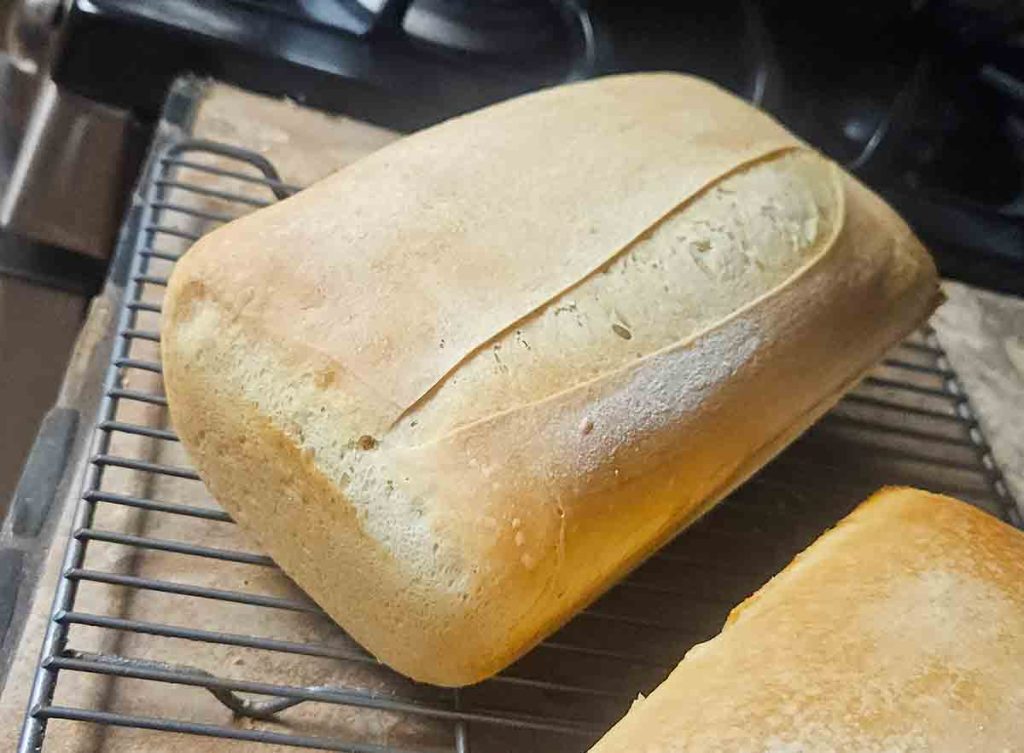
The Lafayette Sandwich loaf with the standard 75 percent hydration, makes a nice loaf in a loaf pan but not so much as a boule. The only issue with the loaf is that a buble on the crust popped and turned an ugly brown.
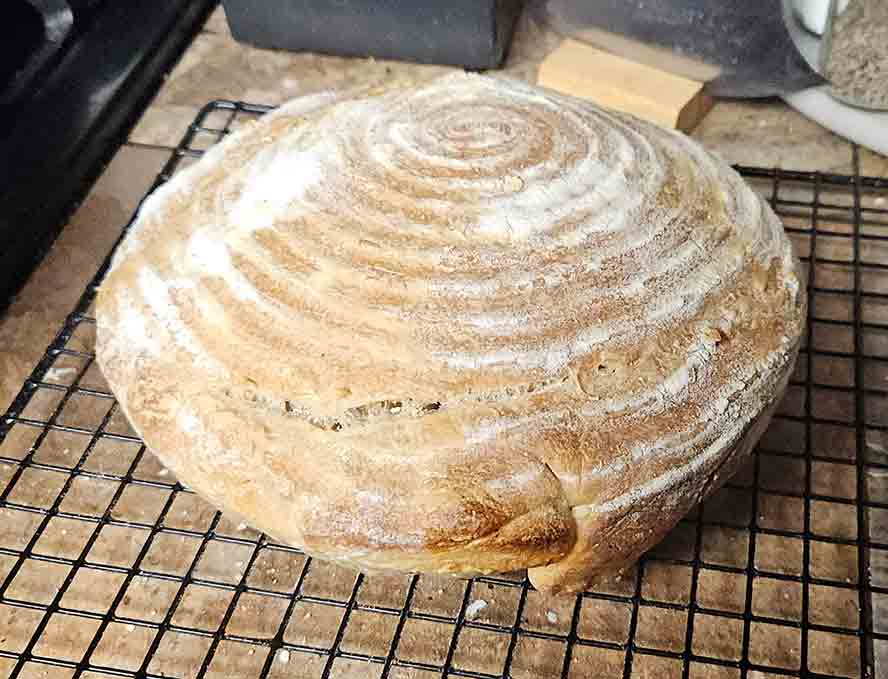
I enjoy working with the dough, and the challenge, of a high hydration dough, but the boule was ugly. Scoring with a Lam was very difficult.

Strain Hardening
is a phenomenon where bread dough becomes progressively more resistant to deformation as it’s worked or stretched. This rheological property is crucial to successful bread making.
What Happens
As dough is kneaded or stretched, the gluten network—formed by glutenin and gliadin proteins—becomes increasingly organized and aligned. Initially, the dough flows relatively easily, but with continued mechanical work, the protein strands orient themselves in the direction of stress, creating a more structured, elastic network. This makes the dough “fight back” more strongly against further stretching.
Why It Matters
- Dough Strength: Strain hardening contributes to dough that can trap gas effectively during fermentation, leading to better oven spring and volume.
- Extensibility vs. Elasticity Balance: Proper strain hardening creates dough that stretches without tearing but also springs back—essential for shaping and structure.
- Working Properties: Bakers rely on this property when assessing dough readiness. Well-developed dough shows resistance when stretched (the “windowpane test”), indicating sufficient gluten development.
Practical Implications
- Undermixed dough lacks sufficient strain hardening and tears easily
- Overmixed dough can become too resistant and inelastic
- Different flour proteins exhibit varying strain-hardening capacities, affecting bread outcomes
- Rest periods during mixing allow for protein hydration and can enhance strain hardening with less mechanical work
This property is one reason why time, folding, and gentle handling can sometimes achieve what aggressive kneading does—allowing the gluten network to develop its strain-hardening characteristics naturally.
So with the Sandwich Sourdough Rye, I mixed it on low for 5 min, let it sit for 10, and then did another knead for 5 and let it sit for 10. Added the oil and let it sit for 15. I then did a little hand kneading and dough shaping using the cup and pull method, and let it sit overnight in the brotform. I used the advice of using Ice cubes and just an initial steam, not keeping water in the drip pan the whole bake. I got a nice rice and a nice ear.
https://www.youtube.com/watch?v=XzK_V0N0zXY&t=11sNov 5, 2025
I have been working on a white sandwich loaf that I was inspired by a loaf from La Jolla bakery, that my friends Tony and Brian gave me to sample.
It is made from flour , water , salt and starter as best I can tell from the ingredients.
I used a recipe from the Prositively Probiotic web page.
An interesting thing was this recipe used AP flour instead of Bread Flour. From a Podcast I found out that a lot of sourdough bakers use AP flour for bread and Bread flour for more like bagels. This an interesting find. So I tried both flours. I don’t notice a huge difference, but I will keep testing.

Here is what you’ll need:
1kg (2.2 pounds, 8.33 cups) all-purpose flour
325 grams yogurt
30g (1 ounce, 4.93 teaspoons) salt
325 g/mL water
250mL (8.5 ounces) active sourdough starter
40 gr Olive Oil
Directions:
Mix the flour, yogurt, water, and starter in the mixing bowl and let it autolyize while you get the rest of the ingredients together.
Add the salt and mix on the stand mixer for 2 sets of 10 minutes. on the second 10 minutes add the oil.
Then work the dough into a nice ball and let it sit overnight in the fridge.
The next day shape it into 2-900+ gram loaves, and form into a loaf making a triangle and roll it up.
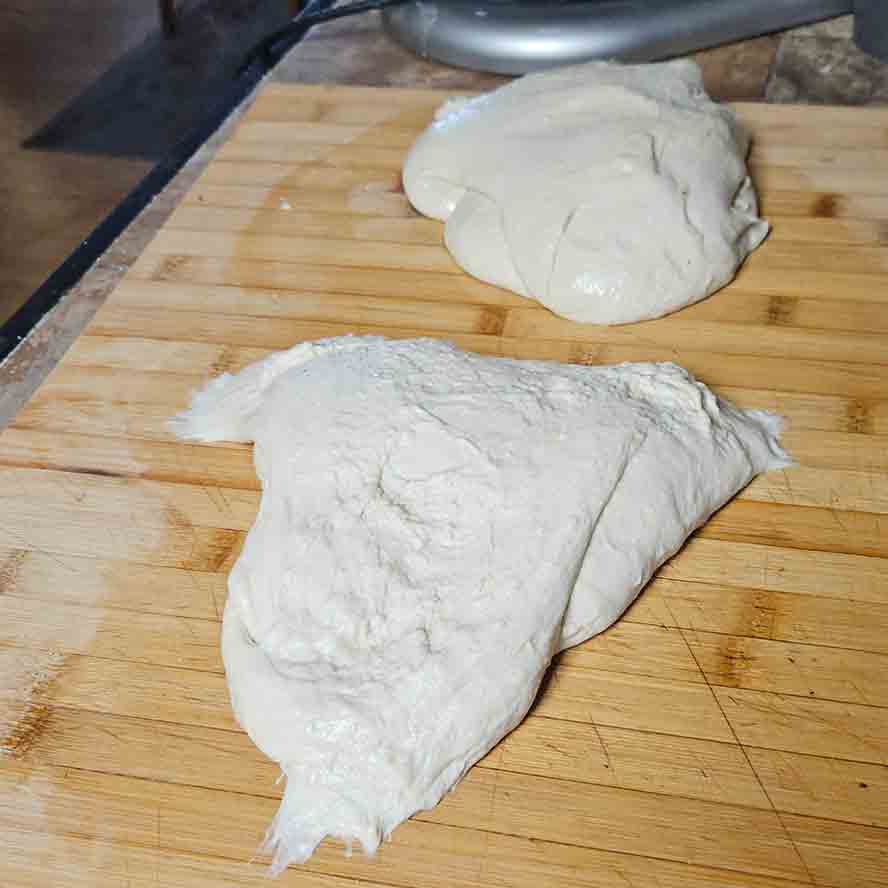
This is a technique for rolling dough for a regular sandwich loaf that is larger in the middle than the ends. Make a triangle and then rolli it up like a croissant only firmly so the dough sticks together. Then you give use the cupping and pulling method to gain a strong shell around it, so it will rise up.
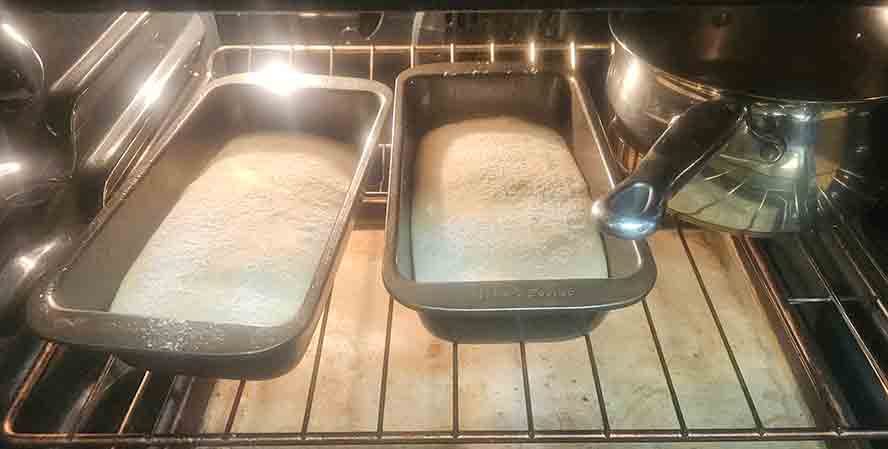
Then put the dough in a very well oiled pan and I let it rise in the oven with just the oven light on and a steaming pan of water.
I let it rise for about 4 hours. But depending on the temperature it may take up to 8 hours or even more to rise. I let it rise to just over the edge of the pan.
I could feel that it didn’t spring back quickly when poked.
I gave it a score down the right of center, then brushed it with milky water to help keep the crust soft.
I then baked it for 15 min at 450 with water in the pan below to create steam.
I then turned the temp down to 350 degrees, brushed the top of the loaf again and then baked it for close to 40 min. rotating the pans every 20 min.
I pulled it out at 210 degrees approx.